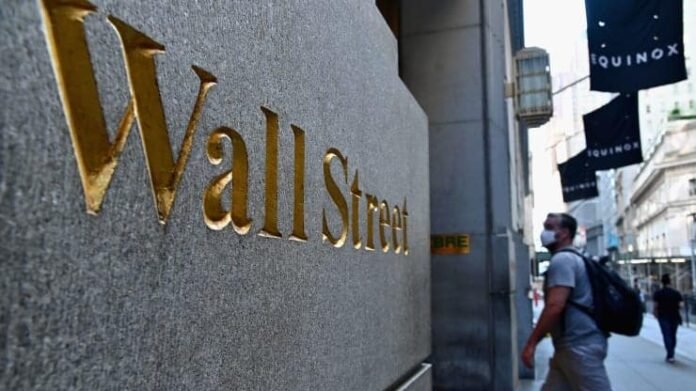
Wall Street Is Going On‑Chain, Yet Many Investors Remain Stuck in Out‑of‑Date Crypto Narratives, Says Bitwise CIO
By [Your Name] – February 25 2026
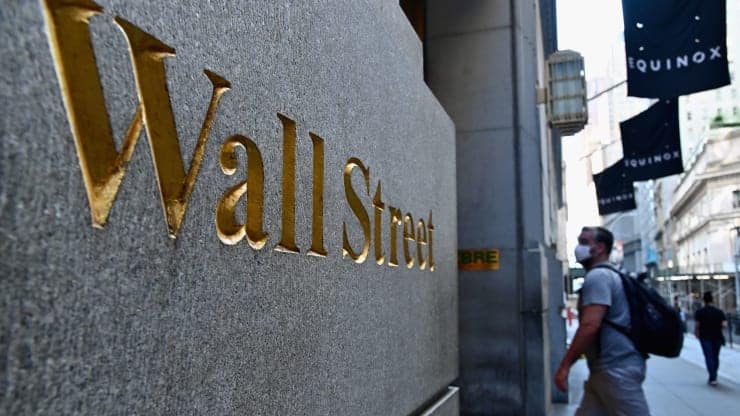
Wall Street firms are rolling out tokenized funds, stablecoins and other on‑chain products.
Executive summary
- Wall Street’s on‑chain push: Major financial institutions are launching tokenized assets, stablecoins and DeFi‑focused initiatives.
- Investor perception lag: Bitwise’s chief investment officer, Matt Hougan, argues that both traditional and crypto‑savvy investors are anchored to old narratives, which obscures the reality of institutional adoption.
- Scale of tokenization: Industry data projects the combined value of tokenized real‑world assets and stablecoins to near $490 billion by the end of 2026.
- Key questions: Where the upside will accrue—public Layer‑1 chains, private networks, DeFi tokens or the incumbents themselves—remains uncertain and could drive the next wave of alpha.
Wall Street’s on‑chain rollout
In a recent internal memo, Hougan highlighted a string of concrete steps that indicate a decisive shift toward blockchain‑based finance on the traditional side of the market.
| Institution | On‑chain initiative |
|---|---|
| BlackRock | Launched a $2 billion “BUIDL” Treasury fund on the Uniswap decentralized exchange, marking one of the largest tokenized sovereign‑debt offerings to date. |
| Apollo Global Management | Tokenized its $700 billion Diversified Credit Fund across six blockchains and disclosed a strategic stake acquisition in the DeFi infrastructure provider Morpho. |
| JPMorgan | Issued a deposit‑token on the Base L2 network and is actively participating in a consortium with Bank of America, Citigroup and Wells Fargo to create a joint stablecoin. |
| Fidelity | Hired a dedicated manager for DeFi vaults, signaling a push to integrate decentralized yield‑generating products into its wealth‑management platform. |
| Paul Atkins (SEC) | Rolled out “Project Crypto,” a cross‑commission effort aimed at modernizing securities regulation so that U.S. markets can support on‑chain settlement. |
| Larry Fink (BlackRock CEO) | Publicly stated that the industry is entering the “early stages of tokenizing all assets,” reinforcing the firm’s long‑term commitment to blockchain‑based securities. |
These moves demonstrate that tokenization is no longer a niche experiment but a mainstream strategic priority for the world’s largest asset managers and banks.
Why investors may be missing the picture
Hougan attributes much of the disconnect to anchoring bias, a cognitive shortcut where individuals give disproportionate weight to the first piece of information they encounter. He notes that many market participants still view crypto through lenses formed during the 2017‑2018 boom‑bust cycle, when speculation and retail hype dominated headlines.
“The biggest alpha opportunities appear when the consensus narrative is stale and reality has moved on, but investors remain anchored to the old story,” Hougan wrote.
According to the CIO, this bias is evident not only among traditional investors—who often dismiss on‑chain developments as peripheral—but also among crypto‑focused participants, who have grown fatigued by repeated promises of “institutional adoption” that appear unfulfilled.
The economics of tokenization
Presto Research, a crypto‑analytics firm, projects that tokenization will be a primary driver of the next institutional phase of crypto. In its 2026 outlook, the firm predicts that the total market cap of tokenized real‑world assets and stablecoins will approach $490 billion by year‑end, up from a few dozen billion in 2020.
The growth is expected to be powered largely by demand for tokenized U.S. Treasury bills and credit instruments—products that combine the liquidity benefits of blockchain with the credit quality of sovereign and corporate debt.
Where will the value accrue?
Hougan warns that while the macro‑trend is clear, the distribution of upside is still an open question:
- Public Layer‑1 chains (e.g., Ethereum, Solana): Could capture fees and developer activity if tokenized assets settle on these networks.
- Private or permissioned blockchains (e.g., Canton Network, Tempo): May win institutional contracts that require higher privacy and compliance controls.
- DeFi token ecosystems: May benefit from ancillary services such as lending, collateral management and yield‑optimization built around tokenized assets.
- Incumbent financial firms: Companies like BlackRock and JPMorgan could internalize much of the upside by owning the infrastructure and token assets themselves, potentially sidelining pure‑play crypto firms.
The answer will likely involve a hybrid of these pathways, with different segments of the market capturing value at various stages of the tokenization lifecycle.
Key takeaways
- Institutional on‑chain activity is accelerating. Large asset managers and banks are deploying tokenized funds, stablecoins and DeFi infrastructure, moving beyond experimental pilots.
- Investor psychology lags reality. Anchoring bias causes many market participants to cling to outdated narratives, undermining the recognition of emerging opportunities.
- Tokenization could become a $490 billion market by 2026. Forecasts from analytics firms point to rapid scaling, especially in Treasury and credit‑instrument tokenization.
- The upside distribution remains uncertain. Whether public blockchains, private networks, DeFi protocols or incumbent financial firms will reap the greatest rewards is still to be seen.
- Alpha may lie in the gap between narrative and fact. As Hougan suggests, savvy investors who can look past stale stories and focus on concrete on‑chain deployments may capture the most significant returns.
The information above reflects publicly available data and analyst commentary as of February 2026. Readers should conduct their own due diligence before making investment decisions.
Source: https://cryptopotato.com/wall-street-is-going-on-chain-and-investors-still-dont-get-it-says-bitwise-cio/