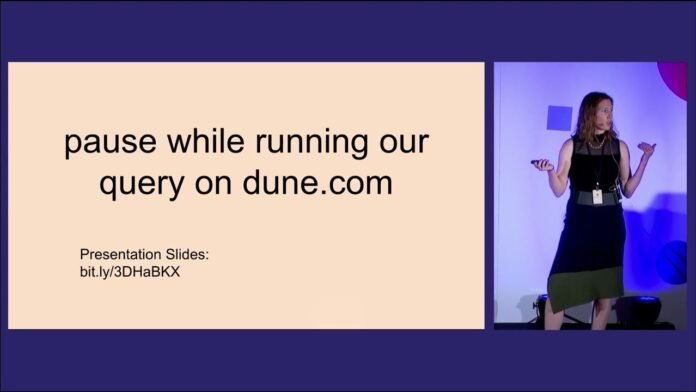
Dune Spellbooks Get a Deep‑Dive with Analyst Meghan Heintz
In a hands‑on workshop, Dune’s “Spellbook” framework was unpacked for the DeFi community, highlighting new ways to build, share, and monetize on‑chain analytics.
San Francisco, March 4 2026 – Dune Analytics, the leading on‑chain data visualization platform, expanded its developer toolkit with a detailed walkthrough of its emerging Spellbook infrastructure, led by data analyst and community contributor Meghan Heintz. The session, hosted as part of Dune’s monthly developer series, offered participants a step‑by‑step look at how Spellbooks can streamline the creation of reusable query “spells,” automate data pipelines, and open new revenue streams for analysts.
What is Spellbook?
Spellbook is Dune’s modular framework that packages a SQL query, its visualizations, and optional runtime logic into a single, shareable component—referred to as a “spell.” Developers can publish spells to the Dune marketplace, where other users can subscribe, embed, or integrate them into their own dashboards. The system also supports versioning, access controls, and on‑chain verification, aligning with Dune’s broader push toward composable, trust‑less analytics.
Full technical documentation is available on Dune’s website: https://dune.com/docs/spellbook/. Heintz’s own commentary on Spellbook can be followed on Twitter at @Dot2DotSeurat.
Workshop Highlights
| Segment | Key Points |
|---|---|
| Architecture Overview | Spellbooks consist of three layers: the SQL layer, the visualization layer, and an optional execution layer (for scheduled runs or webhook triggers). |
| Building a Spell | Heintz demonstrated how to export an existing Dune query, attach a custom Vega visualization, and wrap them in a JSON manifest that defines metadata, pricing, and licensing. |
| Testing & Deployment | The workshop covered local sandbox testing using Dune’s CLI, followed by a one‑click publish process that automatically registers the spell on Dune’s registry and creates a smart‑contract address for ownership tracking. |
| Monetization Models | Participants explored subscription‑based access, one‑time purchases, and revenue‑sharing arrangements with data providers, all enforced by on‑chain escrow contracts. |
| Security & Audits | Heintz stressed the importance of query sanitization and outlined Dune’s audit pipeline, which checks for excessive gas consumption and potential data leakage before a spell is listed. |
Analysis
Spellbook represents a natural evolution for Dune, moving from a purely query‑driven analytics platform to a developer‑first ecosystem. By encapsulating queries as modular, programmable assets, Dune is lowering the barrier for:
- DeFi developers who need reliable, up‑to‑date data feeds without maintaining separate ETL pipelines.
- Analytics entrepreneurs seeking sustainable income through reusable data products.
- Community contributors who can now earn directly from the value their insights generate.
The on‑chain verification of spell ownership also aligns with broader trends in Web3, where composability and provenance are increasingly prized. However, some challenges remain:
- Adoption Curve – While Power Users familiar with Dune’s query language can transition quickly, newcomers may need additional tooling or educational resources.
- Cost Management – Complex spells that run on a schedule could incur higher compute fees, necessitating careful pricing strategies.
- Regulatory Oversight – Monetized data products may fall under emerging financial data regulations, prompting the need for compliance frameworks.
Key Takeaways
- Spellbook adds a product layer to Dune’s analytics, enabling creators to package, license, and sell data insights as “spells.”
- Meghan Heintz’s workshop provided a practical blueprint for building, testing, and deploying spells, emphasizing security and revenue models.
- DeFi projects can now integrate on‑chain data directly from the marketplace, reducing reliance on third‑party APIs.
- Monetization pathways—including subscriptions and one‑off purchases—could spur a new class of analytics entrepreneurs within the crypto ecosystem.
- Future growth will depend on broader developer adoption, tooling improvements, and clear regulatory guidance.
As Spellbook gains traction, analysts and developers alike will be watching how this modular approach reshapes data accessibility and value capture across DeFi and beyond. For a deeper dive, the full Spellbook documentation can be accessed at https://dune.com/docs/spellbook/, and updates from Meghan Heintz are regularly posted on Twitter: https://twitter.com/Dot2DotSeurat.
Source: https://dune.com/blog/dune-spellbooks-with-meghan-heintz