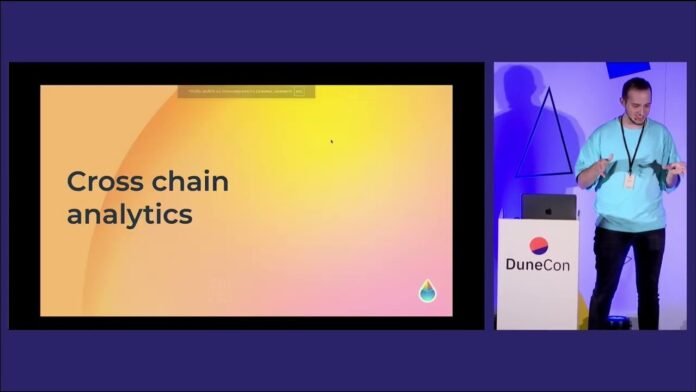
Lido Leverages Dune Analytics to Surface Real‑Time Insights on Liquid Staking – Interview with Grigori Shestakov
Lido’s data‑driven approach to monitoring its staking contracts is now powered by Dune, the on‑chain analytics platform. In a recent walkthrough, Lido engineer Grigori Shestakov explained how the team builds, maintains, and publishes dashboards that track protocol health, user behavior, and emerging risks.
Overview
Lido (https://lido.fi/), the leading provider of liquid staking services across multiple blockchains, has intensified its use of Dune Analytics to generate transparent, up‑to‑date metrics for both internal monitoring and community members. By publishing a suite of public queries and dashboards, Lido aims to give validators, stakers, and developers a clearer picture of the protocol’s performance and to foster greater accountability within the decentralized finance (DeFi) ecosystem.
Grigori Shestakov, a senior data engineer at Lido, walked through the workflow that ties the protocol’s smart contracts to Dune’s querying engine, discussed the specific queries that matter most to Lido’s operations, and highlighted the benefits of making that data openly available.
How Lido Integrates with Dune
-
Data Ingestion – Lido’s contracts emit events on Ethereum, Polygon, and other supported chains whenever users deposit ETH, receive stETH, or withdraw assets. Dune continuously indexes these events, turning them into structured tables that can be queried with SQL‑like syntax.
-
Custom Queries – Shestakov’s team writes a series of modular queries that aggregate key indicators:
- Total Staked Assets – Summation of all tokens locked in Lido’s validator contracts, broken down by chain.
- Yield Distribution – Calculation of accrued rewards per stETH holder, including time‑weighted averages.
- Validator Health – Monitoring of individual validator uptime, slashing events, and beacon chain participation rates.
- User Flow – Tracking of deposit, claim, and withdrawal actions to spot spikes in activity or potential bottlenecks.
-
Dashboard Assembly – The queries feed into live dashboards that feature trend lines, heat maps, and percentile charts. Lido publishes these dashboards publicly on Dune, allowing anyone to verify the protocol’s stated metrics.
- Alerting and Governance – Internally, the same queries power automated alerts. For example, a sudden drop in validator participation triggers a Slack notification for the Lido operations team. The data also informs governance proposals, ensuring that token‑holders can base decisions on verifiable on‑chain statistics.
Why Transparency Matters
Dune’s open‑source nature means that anyone can fork Lido’s queries, modify them, or build complementary visualizations. This openness addresses several longstanding concerns in the liquid‑staking space:
- Risk Assessment – Stakeholders can independently verify that the protocol’s assets remain fully collateralized.
- Performance Auditing – Validators’ behavior can be tracked without relying on Lido’s internal reporting.
- Community Trust – Transparent dashboards reduce speculation and help maintain a stable market for stETH and other Lido derivatives.
Shestakov noted that “the goal isn’t just to showcase numbers, but to let the community interrogate the data themselves. When users can see exactly how rewards are generated and how validators are performing, the incentive to act in the protocol’s best interest grows.”
Analyst Perspective
The move aligns with a broader industry trend toward “data‑first” DeFi products. As protocols mature, the need for reliable, on‑chain analytics becomes a competitive differentiator. Lido’s decision to publish its core metrics on Dune may set a benchmark for other liquid‑staking platforms, such as Rocket Pool or StakeWise, which have historically kept performance data behind proprietary dashboards.
From a risk‑management viewpoint, real‑time visibility into validator health reduces the probability of silent slashing events, a scenario that could erode user confidence. Moreover, the public nature of the dashboards aids regulators and auditors seeking to understand the mechanics behind tokenized staking derivatives.
Key Takeaways
- Open Analytics – Lido uses Dune to aggregate and display critical protocol data, providing an auditable trail of staking activity across multiple chains.
- Operational Alerts – Internally, the same queries fuel automated monitoring tools that flag performance anomalies in near real‑time.
- Community Empowerment – Public dashboards give stakers and developers the ability to verify Lido’s claims independently, bolstering trust.
- Industry Signal – Lido’s transparency push may encourage similar practices among competing liquid‑staking services, raising the overall data standards in DeFi.
- Governance Integration – On‑chain metrics now serve as a direct input for Lido’s DAO proposals, linking quantitative performance to decision‑making.
As liquid‑staking protocols continue to capture a growing share of the Ethereum ecosystem’s capital, the capacity to surface accurate, real‑time analytics will likely become an essential component of protocol resilience and user confidence. Lido’s partnership with Dune, as explained by Grigori Shestakov, exemplifies how data transparency can be operationalized at scale.
Source: https://dune.com/blog/how-lido-creates-analytics-using-dune-with-grigori-shestakov