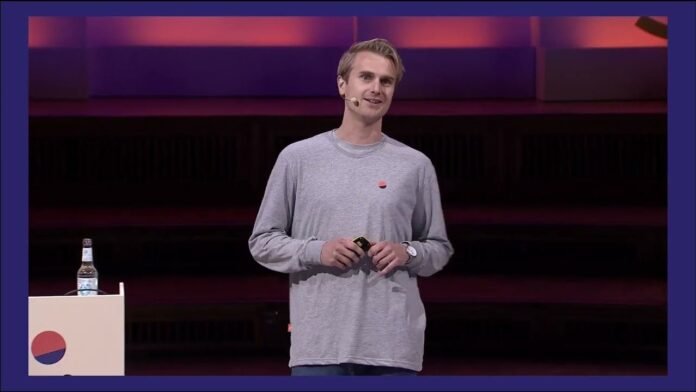
DuneCon 22 Opens with CEO Fredrik Haga’s Vision of Web3’s Shared Backend
Berlin, 22 May 2022 – The inaugural day of DuneCon 22 kicked off with a keynote from Dune Analytics co‑founder and chief executive officer Fredrik Haga. Speaking to an audience of developers, analysts, and investors, Haga traced the evolution of both Dune and the broader Ethereum ecosystem within Berlin, and laid out his perspective on why a “global shared backend” is reshaping the way Web3‑enabled businesses operate.
A Brief History of Berlin’s Role in Ethereum
Haga opened with a retrospective look at Berlin’s early adoption of Ethereum. He highlighted the city’s emergence as a hub for blockchain research labs, hackathons, and venture capital activity in the mid‑2010s, noting that many of the foundational tools and protocols that power today’s decentralized finance (DeFi) applications were first prototyped in local labs and meet‑ups. According to Haga, Dune’s own origins are inseparable from that ecosystem: the company was founded by a group of Berlin‑based engineers who sought to make on‑chain data accessible to anyone with an internet connection.
The “Global Shared Backend” Concept
The centerpiece of Haga’s address was the notion of a universal, permissionless data layer that underlies all Web3 activity. He described this layer as a global shared backend—a set of public, immutable data stores and query interfaces that any dApp, protocol, or analytics platform can tap into without needing to rebuild data pipelines from scratch. In Haga’s view, this architecture constitutes a radical shift from the siloed, centralized back‑office systems that dominate traditional finance and SaaS businesses.
“When every smart contract, every transaction, and every state change is visible on a public ledger, the cost of building data infrastructure plummets. That’s the promise of a shared backend: it democratizes insight and lowers the barrier to entry for new projects,” Haga explained.
He argued that Dune’s platform is positioned at the forefront of this transformation by providing a user‑friendly SQL‑like querying environment that abstracts away the complexities of directly interfacing with Ethereum’s raw data. By doing so, Dune enables analysts to generate real‑time dashboards, monitor protocol health, and surface market signals without writing low‑level code.
Implications for DeFi and Crypto Business Models
Haga’s remarks sparked a broader conversation about how the shared backend model could influence the economics of DeFi. If data extraction and analytics become commoditized, traditional revenue streams based on proprietary market intelligence may erode, giving rise to new business models focused on value‑added services—such as bespoke risk modeling, compliance tooling, and predictive analytics built atop the open data layer.
He also touched on governance implications, suggesting that transparent, auditable data could improve the accountability of decentralized autonomous organizations (DAOs) and reduce information asymmetry among participants.
Community Reaction and Social Media
The keynote resonated strongly with the live audience, many of whom posted live‑tweets and commentary using the hashtag #DuneCon22. Haga’s own Twitter account, @hagaetc, quickly became a focal point for follow‑up questions, ranging from technical details about Dune’s query engine to strategic discussions about data ownership in the Ethereum ecosystem.
Key Takeaways
- Berlin’s legacy: The city’s early blockchain community provided the fertile ground for Dune’s founding and continues to influence Ethereum development.
- Shared backend paradigm: A public, permissionless data infrastructure reduces the cost and complexity of building DeFi analytics tools, fostering faster innovation.
- Dune’s positioning: By offering a low‑code, SQL‑style interface to on‑chain data, Dune serves as a bridge between raw blockchain data and actionable business intelligence.
- Business model shift: As raw data becomes ubiquitous, firms are likely to pivot toward premium services that add analytical depth, compliance, or predictive capabilities.
- Governance impact: Greater data transparency could strengthen DAO accountability and mitigate information asymmetry.
Looking Ahead
Haga concluded by emphasizing that the transition to a globally shared backend is still in its early stages, but the momentum is unmistakable. “We’re building the foundation for an open data economy,” he said, “and Dune will continue to empower anyone who wants to understand what’s happening on‑chain.”
The next sessions at DuneCon 22 will dive deeper into technical workshops, protocol demos, and panel discussions that explore how developers can leverage this emerging data layer to launch the next generation of DeFi products.
Source: https://dune.com/blog/dunecon22-opening-keynote-with-ceo-fredrik-haga