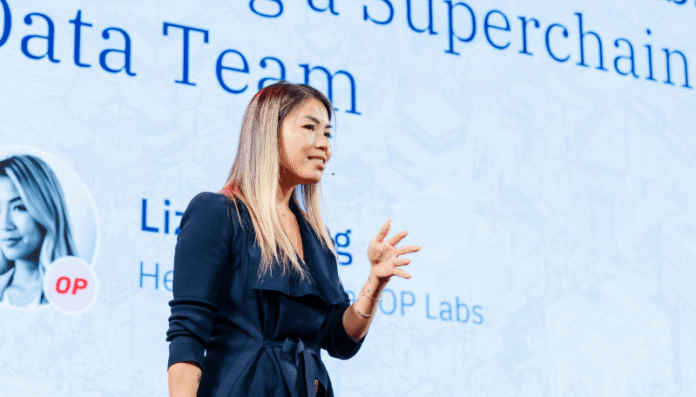
From Chain to Chains: How OP Labs Is Assembling a “Superchain” Data Team – Insights from DuneCon 2024
By [Your Name] – March 4 2026
At this year’s DuneCon, Lizzy Wong—Head of Data at Optimism Labs (OP Labs)—delivered a deep‑dive session on the challenges and opportunities of building a data organization that can keep pace with the rapid expansion of Optimism’s “superchain.” The talk, titled From Chain to Chains: Building a Superchain Data Team, offered a roadmap for teams seeking to turn multichain data into a strategic advantage for Web3 projects.
The Superchain Context
Optimism’s roadmap has moved beyond a single L2 to a “superchain” architecture that interconnects multiple rollups and side‑chains under a common governance and security model. While the design promises higher throughput and lower latency for dApps, it also multiplies the volume and variety of data that must be collected, stored, and analyzed. Wong highlighted that the sheer scale of transaction logs, cross‑chain messages, and user activity across disparate environments is forcing a rethink of traditional blockchain analytics pipelines.
Data as a Strategic Asset
In the blockchain space, data is no longer a by‑product of network activity—it is a core driver of trust, transparency, and growth. Wong emphasized three ways data creates value for a superchain ecosystem:
- Transparency: Real‑time, auditable metrics enable users and regulators to verify the health of the network.
- Trust: Consistent, provenance‑rich analytics underpin decentralized finance (DeFi) products that rely on accurate on‑chain data.
- Ecosystem Expansion: Insightful dashboards and API services attract developers, investors, and partners looking to build on top of the superchain.
Building a Multidisciplinary Data Team
Wong outlined a three‑phase approach to scaling a high‑performance data organization:
| Phase | Focus | Key Roles |
|---|---|---|
| Foundation | Establish reliable ingestion and storage pipelines | Data engineers, infrastructure ops |
| Integration | Connect on‑chain data with off‑chain signals (e.g., wallet analytics, market data) | Data scientists, product analysts |
| Innovation | Deliver predictive models, risk dashboards, and cross‑chain insights | ML engineers, research specialists |
She stressed the importance of hiring across disciplines—engineering, analytics, product, and governance—to ensure that data initiatives remain aligned with the broader business objectives of OP Labs.
Data Strategy Pillars
According to Wong, a robust data strategy for a superchain should rest on three pillars:
- Trustworthiness: Data pipelines must guarantee integrity through cryptographic proofs, immutable logging, and rigorous validation.
- Scalability: Infrastructure should be cloud‑agnostic and capable of handling exponential growth in transaction volume, employing technologies such as sharded databases and distributed query engines.
- ROI‑Driven Metrics: Teams need to define clear key performance indicators (KPIs)—e.g., query latency, data freshness, and user engagement—that directly map to product outcomes like reduced onboarding friction or higher liquidity on DeFi platforms.
Cross‑Chain Analytics and Interoperability
One of the most compelling segments of Wong’s presentation dealt with the emerging field of cross‑chain analytics. As users increasingly move assets across rollups, a unified view of activity becomes essential. OP Labs is experimenting with:
- Standardized event schemas that enable seamless aggregation of actions across chains.
- Interoperability layers (e.g., messaging bridges) that embed analytics metadata directly into cross‑chain transactions.
- User‑centric dashboards that trace a single wallet’s journey across multiple L2s, providing insights into behavioral patterns and potential friction points.
Practical Frameworks for Prioritization
Wong shared a concise framework for prioritizing data projects:
- Identify Business Impact – Rank initiatives by the magnitude of the problem they solve (e.g., improving fraud detection vs. adding a cosmetic UI feature).
- Assess Feasibility – Evaluate data availability, technical complexity, and required resources.
- Align Metrics – Define success criteria that tie directly to core KPIs such as transaction throughput or user retention.
- Iterate and Scale – Begin with a Minimum Viable Product (MVP), gather feedback, then expand scope.
The approach encourages data teams to focus on high‑impact, low‑complexity projects first, creating quick wins that build momentum and stakeholder confidence.
Analysis
Wong’s insights highlight a pivotal shift in how blockchain projects view data: from a peripheral reporting tool to a central strategic asset. The superchain model intensifies the need for robust, cross‑chain analytics, and OP Labs’ roadmap reflects a proactive stance on addressing these demands.
Two trends emerge from the session:
- Data‑first governance: As superchains become more complex, governance bodies will increasingly rely on data dashboards to make informed protocol decisions.
- Product‑driven analytics: DeFi products built on the superchain will differentiate themselves by offering richer, real‑time analytics to end‑users, potentially becoming a competitive moat.
For other L2s and emerging rollups, OP Labs’ methodology offers a replicable blueprint: invest early in scalable infrastructure, recruit a multidisciplinary team, and embed ROI‑focused metrics into the data culture.
Key Takeaways
- Superchain complexity drives the need for unified, cross‑chain data pipelines.
- Data is a core strategic asset, essential for transparency, trust, and ecosystem growth in Web3.
- A phased, multidisciplinary team structure enables scaling from foundational ingestion to innovative analytics.
- Trust, scalability, and ROI‑aligned metrics should anchor any superchain data strategy.
- Practical prioritization frameworks help data teams deliver high‑impact results quickly.
The full session is available for replay on the DuneCon 2024 portal, offering a deeper look at OP Labs’ data roadmap and actionable guidance for teams navigating the evolving landscape of multichain analytics.
Source: https://dune.com/blog/from-chain-to-chains-building-a-superchain-data-team