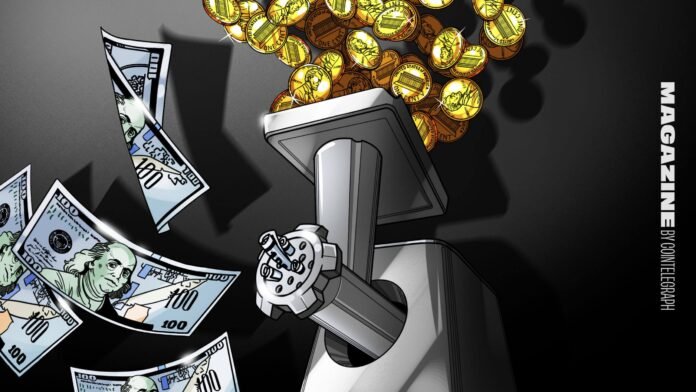
Should You Trade Bitcoin for American Nickels? A Close Look at the 43 % “Profit” Claim
By Felix Ng – Cointelegraph Magazine
When the price of copper and nickel climbs, a meme that has circulated on social media for the last two years resurfaces: “Sell your Bitcoin, buy nickels, melt them down and make a 43 % gain.” The premise appears simple—U.S. five‑cent pieces (commonly called “nickels”) are made of a cupronickel alloy (75 % copper, 25 % nickel) whose intrinsic metal value is reportedly higher than the coin’s face value. Below we break down the numbers, examine the practicalities of turning coins into scrap metal, and evaluate whether the strategy is a viable hedge against Bitcoin’s volatility.
1. Where the 43 % Figure Comes From
- Metal composition – Each nickel contains 3.75 g of copper and 1.25 g of nickel, for a total of 5 g of alloy.
- Current metal prices (April 2024) – Copper trades around US $13,250 per tonne and nickel around US $17,300 per tonne.
- Resulting melt value – At these rates the metal in a single nickel is worth roughly US $0.071, or 7.1 cents. That is about 43 % more than the coin’s legal tender value of five cents.
If you bought enough nickels to match a Bitcoin’s market price (≈ US $72,400 at the time of writing), the raw metal would be valued at roughly US $103,800 according to independent calculators.
2. The Theoretical Profit Path
The “profit” is only realized after converting the coins into a marketable metal product. Two main routes are discussed in online forums:
| Method | Description | Potential Yield (per US $10,000 worth of nickels) |
|---|---|---|
| Direct melt | Heat the whole batch and sell the resulting cupronickel ingot. | Approx. US $14,300 (metal value) |
| Separate alloys | Use chemical or electrolytic processes to isolate copper and nickel, then sell each metal separately. | Roughly the same value, but with added processing costs. |
Both approaches assume you can sell the metal at spot prices without discount—a condition that rarely holds for small‑scale sellers.
3. Hidden Costs and Logistical Hurdles
| Issue | Impact on Profitability |
|---|---|
| Energy & equipment | Copper’s melting point is 1,985 °F (1,085 °C) and nickel’s is 2,651 °F (1,455 °C). Industrial furnaces, protective gear and fuel are required, dramatically raising operating expenses. |
| Chemical processing | If you attempt to separate the metals, you need acids, electrolytic cells, waste‑handling protocols, and safety measures—each adding material and labor costs. |
| Scale and weight | A US $10,000 bundle of nickels weighs ≈ 1 tonne; US $100,000 would weigh more than two African elephants. Transporting, storing, and shipping such quantities are non‑trivial and costly. |
| Market discounts | Scrap dealers usually offer a premium of 10‑20 % below spot prices, especially for non‑industrial batches. This cuts any theoretical gain. |
| Time | Melting and refining can take days to weeks, during which metal prices may fluctuate. |
Taken together, these factors often erase the 43 % margin and can even produce a loss.
4. Legal Barriers
U.S. law explicitly prohibits the melting, exporting, or treating of pennies and nickels for profit. Under 31 U.S.C. § 5111(d), violators can face fines up to US $10,000 or imprisonment for up to five years. While casual defacement (e.g., doodling on a bill) is allowed, bulk processing of coins for metal extraction is illegal.
5. Bitcoin vs. Physical Metals
| Metric | Bitcoin | Copper/Nickel (Nickel coins) |
|---|---|---|
| Liquidity | Daily global trading volume in the billions; transfers possible in seconds. | Scrap metal markets are regional, illiquid, and require physical delivery. |
| Price history (since 2016) | ≈ +18,500 % (BTC price rose from ≈ US $450 to ≈ $72,400). | Commodity prices have swung dramatically but have not delivered comparable long‑term returns. |
| Storage | Digital – no physical space needed. | Massive weight; a tonne of nickels equals roughly the mass of a small car. |
| Regulatory risk | Regulatory clarity varies by jurisdiction but no outright prohibition on ownership. | Federal statutes criminalise large‑scale melting of nickels. |
Even when metal markets experience short‑term spikes—such as the 2007 nickel peak (> US $51,000/tonne) or the 2022 “nickel crisis”—the price surges are fleeting and unpredictable, whereas Bitcoin’s overall trajectory has been upward over the long term.
6. Analyst Takeaway
- The 43 % figure is a static snapshot of metal content vs. face value, not a net profit after processing, logistics, and legal compliance.
- Real‑world execution is prohibitively expensive and risky. Most hobbyists or small‑scale traders would end up with a lower return or a legal penalty.
- Bitcoin remains a more efficient store of value for those seeking liquidity, portability, and global reach.
- Hard‑asset diversification (including metals) can still be part of a balanced portfolio, but buying physical nickels solely to melt them is not a practical hedge.
Key Takeaways
- Metal Value vs. Face Value – A U.S. nickel’s intrinsic metal content is currently worth about 7.1 cents, roughly 43 % above its nominal value.
- Processing Costs – Melting or chemically separating copper and nickel requires industrial equipment, energy, and safety measures that erode the theoretical margin.
- Legal Restrictions – Federal law forbids the bulk melting of nickels for profit; violations carry severe penalties.
- Logistics Matter – Transporting and storing thousands of dollars in nickels is cumbersome and costly.
- Bitcoin’s Advantages – High liquidity, negligible storage needs, and a strong historical return profile make it a far more viable “hard‑money” alternative.
Bottom line: While the meme of turning Bitcoin into a vault of nickels is eye‑catching, a realistic assessment shows that the strategy is neither profitable nor legally safe. Investors looking for inflation hedges would be better served by conventional assets—gold, diversified metal exposure via ETFs, or maintaining a well‑managed Bitcoin position—rather than attempting to melt their digital wealth into copper‑nickel alloy.
Source: https://cointelegraph.com/magazine/big-questions-sell-bitcoin-nickels-5-cent-coin-metals-profit/?utm_source=rss_feed&utm_medium=feed&utm_campaign=rss_partner_inbound