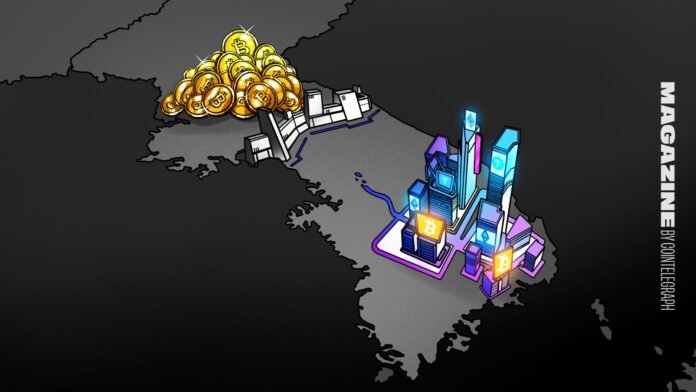
South Korea’s Crypto Boom Fuels Personal Wealth, While North Korea Turns Digital Heists into Arms Funding
Seoul – The Korean peninsula now showcases two diametrically opposed narratives in the cryptocurrency arena. In the south, a vibrant retail market, government flirtation and a tech‑savvy culture are turning digital assets into a lucrative side‑income for millions of young professionals. In the north, the same technology is being weaponised – not on the trading floor, but in cyber campaigns that generate billions in illicit proceeds used to finance the regime’s weapons programmes.
A Retail‑Driven Surge South of the DMZ
South Korea has long been a pioneer of broadband adoption, and that early connectivity has evolved into a robust crypto ecosystem. The country’s millennials and Gen‑Z workers, many of whom endure some of the longest annual work hours among OECD members, view digital tokens as a potential escape from a rigid career ladder and modest wage growth.
The appeal is amplified by a cultural fascination with rapid financial success. News of a single crypto windfall spreads quickly through social media, reinforcing the perception that digital assets can be a “golden ticket.”
Political leaders have taken note. During the 2022 presidential campaign, Yoon Suk‑yeol made a series of crypto‑friendly promises – from reviving the metaverse agenda to lifting the previous ban on initial‑coin offerings (ICOs). Although his term was cut short, the subsequent snap election kept crypto high on the agenda, and the incoming administration under Lee Jae‑myung has signalled a similarly open stance.
This policy environment, combined with a flood of venture capital, has transformed Seoul into a regional hub for blockchain startups. A16z opened an Asia‑Pacific office in the city, while ecosystem projects such as Solana, LayerZero and Arbitrum have built dedicated Korean teams. Local venture house Hashed recently launched a won‑backed stablecoin, a sign that traditional finance institutions are beginning to engage with the market.
The impact is visible in trading data. Won‑denominated crypto volumes repeatedly outpace those measured in U.S. dollars, and the domestic “kimchi premium” – where Bitcoin and other assets trade at a discount or premium to global prices – has become a fixture of Korean exchanges. Recent regulatory tweaks, such as the 2024 user‑protection law and the easing of corporate investment bans, suggest the market is moving from a retail‑only niche toward broader institutional participation.
North Korea’s Crypto‑Enabled Arms Pipeline
Across the 38th parallel, the Hermit Kingdom has no domestic crypto market to speak of. Instead, the regime treats blockchain technology as a lifeline for moving value beyond the reach of sanctions. State‑linked hacking groups have been linked to a string of high‑profile thefts, including a $1.4 billion breach of the Bybit exchange and a series of flash‑loan attacks that have drawn global headlines.
Chainalysis estimates that North Korean actors stole roughly $6.75 billion in cryptocurrency in 2025 alone, and a United Nations report earlier this year attributed $2.02 billion of that activity to the previous year. When compared with the United Nations’ rough estimate of the DPRK’s 2023 GDP ($15–17 billion), the illicit proceeds represent more than ten percent of the nation’s economic output – a disproportionate share that underscores how central crypto is to the regime’s financing strategy.
The stolen funds are not simply hoarded. International watchdogs, including the Financial Action Task Force (FATF), have identified a direct link between these crypto hauls and North Korea’s development of ballistic‑missile and nuclear capabilities. The same digital assets are laundered through mixers, overseas exchanges and shell companies, ultimately reaching entities that support the regime’s weapons programmes.
Converging Trends and Diverging Outcomes
Both Koreas illustrate how the same technology can be harnessed for radically different ends:
| Aspect | South Korea | North Korea |
|---|---|---|
| Primary users | Retail investors, gamers, start‑ups | State‑backed cyber units |
| Purpose | Wealth creation, financial diversification, tech innovation | Circumvent sanctions, fund weapons development |
| Regulatory stance | Evolving – from bans to a nascent comprehensive framework | Targeted by international AML/CFT measures, but domestic controls are nonexistent |
| Economic impact | Contributes to a growing fintech sector; estimated to be a multi‑billion‑dollar market | Represents ~13 % of national GDP; funds strategic military projects |
The contrast also feeds a paradoxical feedback loop. While Seoul’s market benefits from a vibrant, albeit insulated, ecosystem, the “kimchi premium” reflects the limited cross‑border liquidity that regulators have imposed. Meanwhile, North Korea’s aggressive crypto‑theft campaigns have accelerated global calls for tighter anti‑money‑laundering rules, prompting jurisdictions across Asia and Europe to tighten licensing requirements for exchanges and virtual‑asset service providers (VASPs).
Analyst View
- Market resilience – Despite setbacks such as the 2022 Terra/Luna collapse, South Korean retail enthusiasm has remained strong. The entry of global investors and the launch of local stablecoins suggest a maturing market that could gradually integrate with the broader institutional crypto economy.
- Regulatory risk – The South Korean government’s push for a unified crypto law is still hampered by inter‑agency coordination. Investors should monitor the implementation timeline, especially concerning AML obligations that may affect the kimchi premium.
- Geopolitical exposure – North Korea’s reliance on crypto for sanctions evasion highlights the vulnerability of the global financial system to state‑sponsored cybercrime. Continued FATF pressure is likely to tighten compliance across exchanges, but covert channels will persist, requiring sustained intelligence cooperation.
- Strategic implication – The dual Korean narratives underscore the importance of policy design. Encouraging legitimate innovation while preventing illicit misuse is a delicate balance that many emerging markets will have to negotiate in the coming years.
Key Takeaways
- South Korea is cementing its status as a leading retail crypto market, driven by high‑speed internet culture, long work hours and a generational desire for financial mobility.
- Government initiatives have shifted from outright bans to a more nuanced regulatory environment, encouraging venture investment and the development of domestic blockchain infrastructure.
- North Korea continues to extract billions in cryptocurrency through sophisticated hacking operations, with a significant share of these funds funneled into weapons development.
- International bodies such as the FATF are tightening crypto‑related AML/CFT rules, partly in response to the DPRK’s activities, which may curtail some of the regime’s financial channels.
- The divergent uses of crypto on the peninsula illustrate both the technology’s capacity for economic empowerment and its susceptibility to exploitation by authoritarian regimes.
Reporting by Cointelegraph Magazine, based on analysis of market data, regulatory filings and expert interviews.
Source: https://cointelegraph.com/magazine/south-korea-gets-rich-from-crypto-north-korea-gets-weapons/?utm_source=rss_feed&utm_medium=feed&utm_campaign=rss_partner_inbound