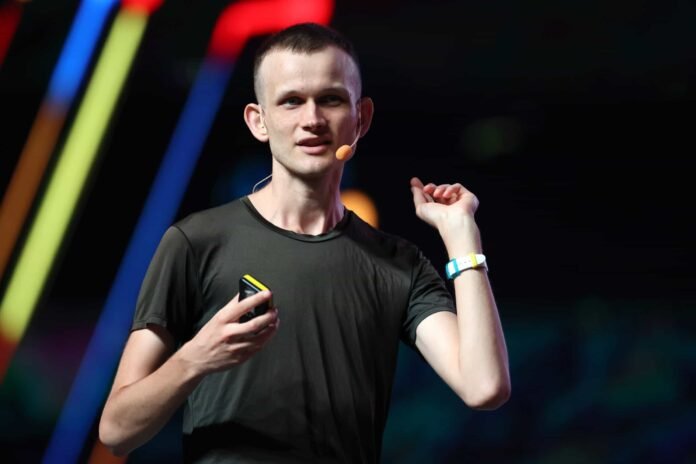
Vitalik Buterin Calls for Human‑Verified AI‑Assisted Wallets in Next‑Gen Crypto Transactions
Ethereum co‑founder outlines a hybrid model where AI proposes transaction plans while users retain final approval, aiming to boost usability without compromising security.
Synopsis
In a series of posts on the decentralized social network Farcaster, Vitalik Buterin—co‑founder of Ethereum—sketched a vision for future Web 3 wallets that integrate artificial‑intelligence (AI) assistance but keep high‑value decisions firmly in the hands of the user. The proposal, which has already sparked discussion among developers, suggests a workflow where an AI engine suggests transaction parameters, a local light client runs a simulation, and the user manually confirms the final action.
The Proposed Workflow
-
AI Suggests a Transaction – When a user initiates a transfer, an on‑device or cloud‑based AI model analyses the intended payload and generates a suggested transaction plan. This could range from a simple token transfer to a more complex multi‑hop swap or yield‑optimisation strategy.
-
Local Simulation – Before any signature is produced, a lightweight client runs a deterministic simulation of the proposed transaction, verifying the expected outcome (e.g., final balances, gas usage, and slippage).
- Human Review & Confirmation – The wallet presents a clear, human‑readable summary of the AI’s plan and the simulation results. The user must explicitly approve the transaction, typically via a hardware‑wallet button or biometric confirmation, before the signature is broadcast.
Buterin emphasised that this separation—AI for suggestion, human for final sign‑off—allows the convenience of machine‑learning‑driven optimisation while preserving trust in the user’s intent, especially for “multi‑million‑dollar” operations that he does not wish to delegate to large language models (LLMs).
Security‑First Design
Buterin warned that any implementation must adopt a conservative security posture. One concrete suggestion is to strip the transaction flow of dApp user interfaces, which are often exploited for phishing, man‑in‑the‑middle attacks, or privacy breaches. By routing every transaction through the wallet’s own verification layer, the attack surface could be dramatically reduced.
Community Reactions and Technical Suggestions
Developers quickly began sketching practical extensions to the concept:
-
Andrey Petrov, an Ethereum engineer, described two complementary scenarios. In the first, the AI interprets the raw transaction data, guesses the user’s intent, and explains it in plain language for confirmation. In the second, the user either states the desired action directly or relies on the AI’s explanation; the AI then attempts to reconstruct the transaction independently, checking for discrepancies that could indicate malicious payloads.
- fkaany, another Farcaster participant, envisioned a broader framework where AI orchestrates complex strategies such as multi‑hop swaps, gas‑price optimisation, and yield‑farming loops. The local light client would again simulate outcomes, handing a concise, audited summary to the user for manual approval. This approach could mitigate the “blind signing” problem that plagues many DeFi interfaces.
The discussions highlight a consensus that AI can be a powerful assistant for navigating the increasingly intricate DeFi ecosystem, provided a robust, user‑centric verification step remains.
Analysis: Why This Matters Now
-
Usability Gap – As DeFi products mature, end‑users confront steep learning curves, complex transaction data, and frequent UI‑based exploits. AI‑driven assistance could democratise access by abstracting low‑level details while still preserving safety.
-
Regulatory Pressure – Regulators worldwide are scrutinising “automated” financial services for consumer protection. A model that keeps the final decision with the human user may satisfy compliance requirements that demand explicit consent for high‑value transfers.
-
Technical Feasibility – Recent advances in lightweight on‑device inference and the proliferation of light clients (e.g., Nethermind, Erigon’s Light Mode) make it realistic to run fast simulations without relying on third‑party nodes, preserving decentralisation.
- Risk Management – By removing dApp UI layers from the execution path, the wallet reduces exposure to common attack vectors such as malicious front‑ends, compromised browser extensions, and spoofed transaction data.
Key Takeaways
| Takeaway | Implication |
|---|---|
| AI as a Suggestion Engine | Enhances transaction efficiency (e.g., optimal gas, best‑price swaps) while keeping the user in control. |
| Human Verification Required | Maintains trust for high‑value transfers; prevents over‑reliance on LLMs for critical financial decisions. |
| Local Light‑Client Simulation | Provides deterministic outcome verification without exposing sensitive data to external services. |
| Eliminate dApp UI from Flow | Cuts down phishing and privacy attack surfaces; centralises security within the wallet. |
| Community Interest | Developers already propose concrete implementations, indicating rapid prototyping could follow. |
Outlook
Buterin’s proposal arrives at a pivotal moment when both AI capabilities and DeFi complexity are accelerating. If wallet developers adopt a “human‑in‑the‑loop” architecture, the next generation of crypto wallets could combine the speed and insight of AI with the security guarantees of user‑limited signatures. The ongoing dialogue on Farcaster suggests that the community is poised to experiment with these ideas, potentially shaping the standard for safe, AI‑enhanced crypto interactions in the months ahead.
Source: https://cryptopotato.com/vitalik-buterin-proposes-human-verified-ai-wallets-for-crypto-transactions/