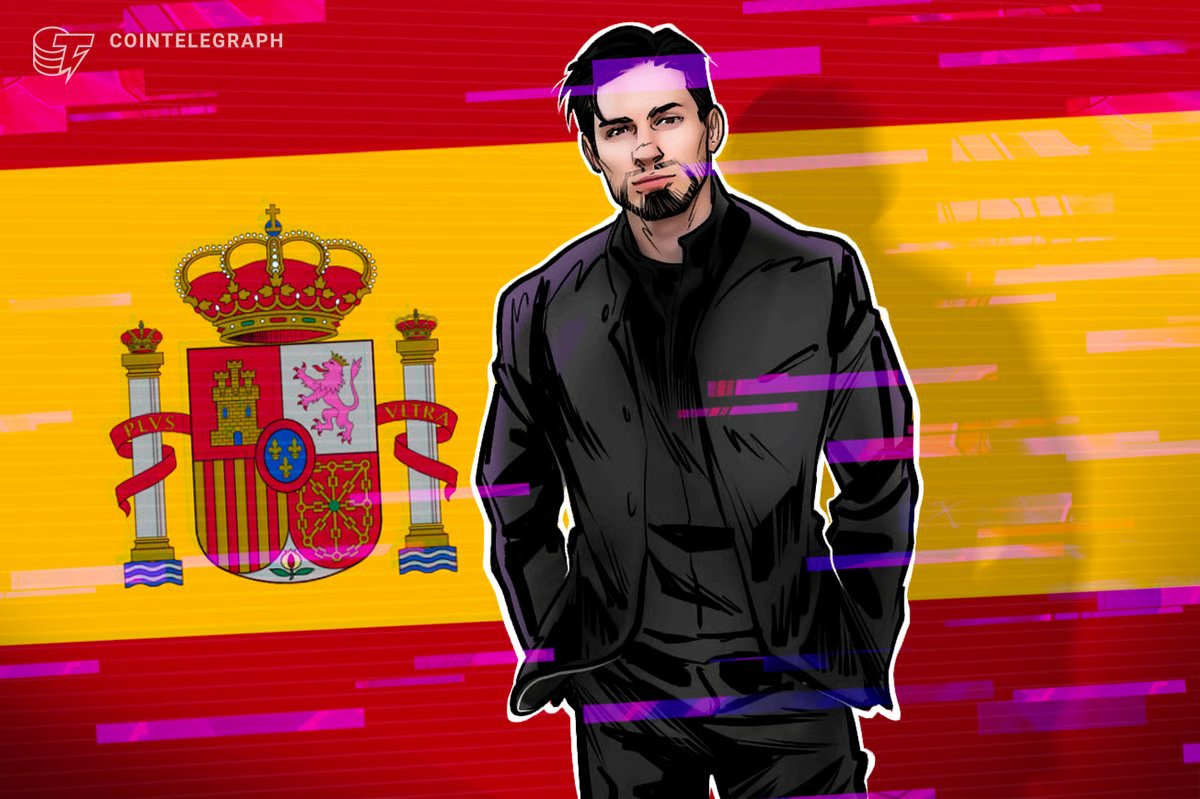
Telegram Co‑Founder Warns of Privacy Risks as Spain Moves Toward Mandatory Online Age Checks
Madrid, 4 Feb 2026 – Telegram’s founder Pavel Durov has joined a growing chorus of privacy advocates who argue that Spain’s newly announced online age‑verification regime could usher in a wave of state‑enabled surveillance and content restriction. The move, championed by Prime Minister Pedro Sánchez, would require social‑media platforms to confirm the age of any user under 16 before granting access to their services.
What the Spanish proposal entails
At the World Governments Summit in Dubai, Sánchez framed the initiative as a protective measure for minors, stating that social‑media platforms have become “a failed state” and that the government must “take back control.” The draft law calls for:
- Mandatory age verification for all users under 16 on social‑media and messaging apps.
- Mechanisms that could force platforms to collect identifying data, potentially de‑anonymising users.
- Penalties for non‑compliant services, including fines and temporary bans.
Spain’s approach mirrors similar age‑verification pilots already under discussion in the United Kingdom and other European jurisdictions.
Durov’s reaction
In a Telegram post on Wednesday, Durov warned that the legislation “threatens internet freedoms” and could transform Spain into “a surveillance state under the guise of protection.” He emphasized three main concerns:
- Government‑driven censorship – The ability to verify ages could give authorities a foothold to block or filter content deemed undesirable.
- Privacy erosion – Requiring personal data to prove age would expose users to de‑anonymisation, jeopardising the anonymity that many messenger and crypto users rely on.
- Mass‑surveillance precedent – Mandatory data collection could set a template for broader monitoring of online activity.
Durov’s comments have resonated within the crypto community, where privacy and decentralised identity solutions are often positioned as alternatives to state‑run verification systems.
Wider backlash
The proposal has sparked criticism from a range of voices:
- Privacy activists and “cypherpunks” argue that age verification is a thinly‑veiled tool for political censorship.
- Journalist Taylor Lorenz and others have suggested that the policy is more about control than child protection.
- Elon Musk publicly mocked the plan, questioning its efficacy.
- Industry leaders such as Concordium CEO Boris Bohrer‑Bilowitzki have pointed out that current verification methods push users toward VPNs and other circumvention tools, undermining the policy’s intent.
Blockchain as an alternative
In the wake of the controversy, some technologists are promoting blockchain‑based digital identity as a privacy‑preserving solution. Bohrer‑Bilowitzki proposed a system where cryptographic proofs confirm a user’s age without revealing personal details—a concept that aligns with emerging “self‑sovereign identity” standards being explored in the crypto sector.
If adopted, such technology could allow platforms to comply with age‑restriction rules while maintaining user anonymity, though regulatory acceptance remains uncertain.
Potential impact on Telegram and the crypto ecosystem
- Operational risk for Telegram – Should Spain enforce the law, Telegram may need to develop or integrate age‑verification tools, potentially compromising the platform’s reputation for privacy.
- Regulatory spillover – Other EU members could look to Spain’s framework as a template, prompting wider industry adjustments.
- Opportunity for decentralized identity providers – A demand for privacy‑friendly verification could accelerate the development and adoption of blockchain‑based ID solutions, benefitting projects that already serve the crypto market.
- User migration – Stricter verification could drive privacy‑conscious users toward platforms that either resist the law or offer anonymous access, reshaping the social‑media landscape.
Key takeaways
- Spain’s draft law mandates age verification for under‑16 users on all major social‑media platforms, raising concerns about privacy and state surveillance.
- Pavel Durov has warned that the measures could erode anonymity and enable censorship, echoing broader fears within the crypto and privacy communities.
- Critics view the policy as a control mechanism rather than a child‑protection tool, citing potential misuse for political suppression.
- Blockchain‑based digital identity solutions are being touted as an alternative that could satisfy regulatory requirements without sacrificing user privacy.
- If enacted, the law could set a precedent for other European nations, prompting both compliance challenges for platforms like Telegram and new opportunities for decentralized identity providers.
This article is based on public statements from Pavel Durov, Prime Minister Pedro Sánchez, and commentary from industry figures. Cointelegraph adheres to its editorial policy of independent, transparent journalism; readers are encouraged to verify information through primary sources.
Source: https://cointelegraph.com/news/telegram-pavel-durov-slams-spain-online-age-verification?utm_source=rss_feed&utm_medium=feed&utm_campaign=rss_partner_inbound