The Evolution of the DeFi User Base: Insights from Danning Sui of 0x Labs
By [Your Name] – [Date]
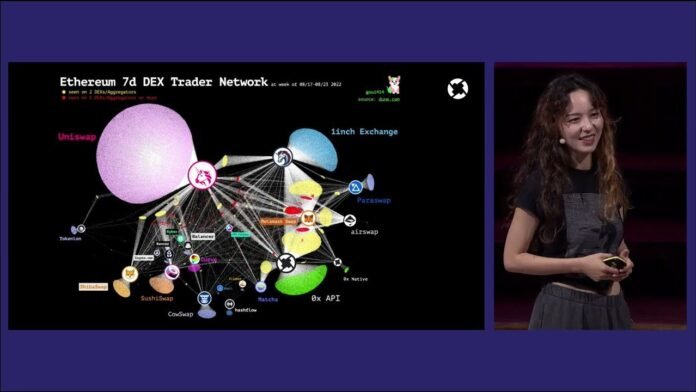
As decentralized finance (DeFi) matures, the composition of its participants has shifted dramatically—from early‑stage crypto enthusiasts to a broader spectrum of traders, developers, and institutional actors. In a recent interview, Danning Sui, a product strategist at 0x Labs, dissected this transformation, tracing the trajectory of the decentralized exchange (DEX) marketplace and the changing profile of its users.
A Brief History of DEX Participation
When the first DEXs launched on Ethereum in 2017‑2018, the user base was narrowly defined:
| Era | Dominant Participants | Typical Activity |
|---|---|---|
| Pioneer Phase (2017‑2018) | Crypto hobbyists, early adopters, and developers | Manual token swaps, liquidity provision on rudimentary AMM pools |
| Growth Phase (2019‑2020) | Retail traders, yield‑farmers, and community builders | Automated market maker (AMM) arbitrage, staking LP tokens for incentives |
| Mainstream Phase (2021‑2022) | Institutional traders, custodial platforms, and cross‑chain projects | High‑frequency trading, integration of DEXs into fiat on‑ramps, API‑driven liquidity sourcing |
| Current Phase (2023‑2024) | Hybrid participants – retail, DeFi‑native firms, and regulated entities | Multi‑chain aggregations, permissioned liquidity, and compliance‑focused order routing |
Sui notes that the “user base has not simply grown in size; it has diversified in intent and sophistication.” While early adopters were motivated by experimentation and ideology, later participants pursue measurable returns, risk management tools, and regulatory compliance.
Key Drivers Behind the Shift
-
Improved User Experience
The introduction of gas‑efficient smart contracts, better UI/UX, and wallet integrations lowered entry barriers for non‑technical users. 0x’s native order‑book protocol, for example, now offers “gas‑less” order placement through relayers, attracting users who previously avoided DEXs due to high transaction costs. -
Cross‑Chain Interoperability
Multi‑chain bridges and Layer‑2 scaling solutions have expanded the addressable market. Users can now route orders across Ethereum, Solana, and emerging networks without manual swaps, prompting a wave of “one‑stop‑shop” traders. -
Regulatory Clarity
As jurisdictions issue guidance on DeFi services, institutional actors have begun testing the waters. Sui points out that “the rise of compliant liquidity providers and KYC‑enabled aggregators signals a new era where regulated capital can safely interact with permissionless markets.” - Data‑Driven Trading Strategies
Access to real‑time on‑chain analytics and off‑chain market data has enabled algorithmic traders to operate at scale. The proliferation of analytics platforms has turned DEXs into venues for sophisticated arbitrage and statistical arbitrage strategies.
0x Labs’ Role in Shaping the Landscape
0x Labs, the team behind the open‑source 0x protocol, has positioned itself as a bridge between the traditional finance infrastructure and the decentralized world. By offering modular components—order books, liquidity aggregators, and settlement layers—the company enables both new entrants and established firms to plug into DeFi with minimal friction.
Sui highlights three initiatives that reflect this mission:
- 0x API Enhancements: The updated API now supports batch order routing across multiple DEXs, improving execution quality for institutional traders.
- Permissioned Relayer Networks: Tailored for custodial platforms that require AML/KYC checks, these relayers preserve the on‑chain benefits of DEXs while meeting compliance mandates.
- Educational Partnerships: 0x Labs collaborates with university programs and developer bootcamps to cultivate the next generation of DeFi engineers, expanding the talent pool that fuels user adoption.
Analysis: Where the DeFi User Base Is Headed
The current trajectory suggests a convergence of three trends:
- Hybrid Marketplaces – Future DEXs will blend permissionless and permissioned features, offering “opt‑in” compliance layers without sacrificing core decentralization principles.
- Institutional Liquidity Influx – As more regulated entities enter, we can expect tighter spreads, deeper order books, and increased demand for audit‑ready infrastructure.
- Layer‑2 Dominance – With Ethereum’s scaling roadmap progressing slowly, Layer‑2 solutions are becoming the primary gateway for high‑volume, low‑latency trading.
These dynamics will likely compress the advantage that early‑stage DeFi innovators once held, shifting the competitive edge toward platforms that can deliver robust compliance, superior performance, and seamless multi‑chain interoperability.
Key Takeaways
- User diversification: The DeFi participant profile has broadened from hobbyist traders to a mix of retail, institutional, and regulated actors.
- Experience matters: Lower transaction costs, improved UI/UX, and developer tooling are critical for mainstream adoption.
- Regulation is a driver, not a barrier: Clearer regulatory frameworks are encouraging institutional liquidity while prompting DEXs to incorporate compliant solutions.
- 0x Labs as an enabler: Through open‑source protocols and modular services, 0x Labs is facilitating the integration of traditional finance practices into the DeFi ecosystem.
- Future outlook: Hybrid, compliance‑friendly DEXs on Layer‑2 networks are poised to dominate the next phase of the DeFi market.
Danning Sui’s observations underscore a pivotal moment for decentralized finance—a shift from niche experimentation to a robust, multi‑layered marketplace that accommodates a broad spectrum of participants while preserving the core ethos of decentralization.
Source: https://dune.com/blog/the-evolution-of-defi-user-base-with-danning-sui-0x-labs