


Dune Launches “Dune Index” – A New Benchmark for Real‑World Blockchain Adoption
By [Your Name] – DeFi & Crypto News Desk
Date: [Insert Date]
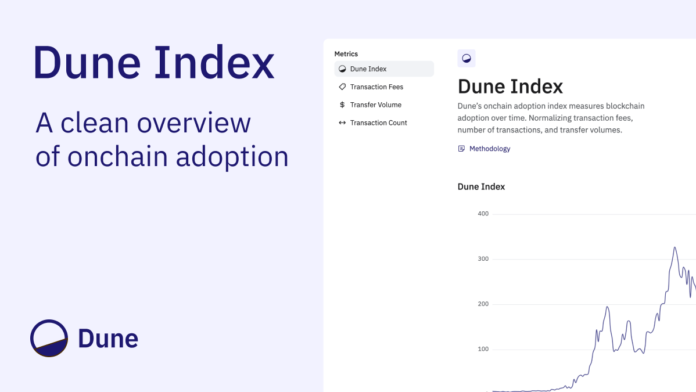
In an effort to move beyond the classic price‑centric narrative that often dominates cryptocurrency reporting, Dune Analytics has unveiled the Dune Index, a data‑driven metric that aims to capture genuine user activity across the blockchain ecosystem. The index aggregates a suite of on‑chain signals—transaction volume, value moved, fees paid, among others—to deliver a more nuanced picture of how and where blockchain technology is being employed.
Why a New Adoption Metric?
Traditional indicators such as token price, the count of active addresses, or total value locked (TVL) provide useful snapshots, but they fall short of reflecting the depth of everyday usage:
| Conventional metric | Limitation |
|---|---|
| Price | Mostly mirrors market sentiment, not necessarily utility or adoption. |
| Active addresses | Addresses can be created ad‑hoc or used for single‑purpose actions, inflating perceived user counts. |
| TVL | Large deposits can skew figures, masking how many participants are actually interacting with protocols. |
The Dune Index attempts to remedy these blind spots by focusing on activity‑driven data. By weighting metrics that correspond to actual blockchain usage—such as the number of transactions, the amount of assets transferred, and the fees users are willing to pay—the index strives to separate speculative hype from functional adoption.
How the Index Is Constructed
The framework pulls together several on‑chain variables:
- Net transaction count – Every transfer, contract call, or interaction contributes to a cumulative activity score.
- Value transferred – The total monetary worth moved across chains, indicating the economic significance of the interactions.
- Fees paid – Reflects the demand for blockspace; higher fees generally signal stronger network utilization.
These components are normalized and combined into a single index that can be tracked over time and compared across blockchains. The methodology filters out “noise” like net‑zero transfers that frequently appear during speculative spikes, thereby spotlighting genuine utility.
Early Insights From the Dune Index
Although still in its infancy, the index has already highlighted a few notable trends:
- Diversified chain participation – Unlike prior boom periods, where Bitcoin and Ethereum dominated the adoption narrative, the current landscape shows a richer mix of ecosystems contributing to activity levels.
- Approaching historical peaks in “real terms” – Transaction volumes and net value moved are nearing the highs seen during earlier market cycles, but the underlying drivers appear more utility‑focused rather than purely speculative.
- Lower cost of usage – Recent drops in gas fees mean users are achieving more value for less expenditure, a factor that could accelerate broader adoption as scaling solutions mature.
Visualization tools embedded in the Dune platform illustrate these dynamics, with charts comparing chain‑by‑chain contributions, fee trends, and transaction growth over time.
What This Means for Stakeholders
- Investors can use the index as a supplemental gauge of project health, especially when assessing whether a token’s price aligns with underlying usage.
- Developers gain a transparent benchmark to measure the impact of their dApps beyond mere wallet counts, informing roadmap decisions.
- Analysts & Researchers receive a consolidated data source that reduces the need to juggle disparate metrics, enabling clearer macro‑level assessments.
Key Takeaways
- Activity‑centric focus: The Dune Index prioritizes real on‑chain actions over market‑driven signals, offering a more reliable barometer of adoption.
- Multi‑chain perspective: By aggregating data across major blockchains, the metric captures the ecosystem’s evolving heterogeneity.
- Noise filtration: The methodology excludes low‑impact transactions that can artificially inflate conventional activity counts.
- Utility‑driven growth: Current trends suggest that rising activity is being driven by functional use cases, not just price speculation.
- Accessible: The index is publicly viewable on Dune’s platform, allowing anyone to monitor ongoing adoption patterns.
Looking Ahead
Dune Labs encourages the community to explore the index directly on the platform and to monitor forthcoming updates as the team refines the underlying formulas. By continuously tracking these activity signals, the Dune Index aspires to become a staple reference for anyone seeking an evidence‑based view of blockchain’s real‑world impact.
For daily updates and deeper dives into the index’s methodology, visit the Dune metrics hub at dune.com/metrics.
Source: https://dune.com/blog/introducing-the-dune-index














































