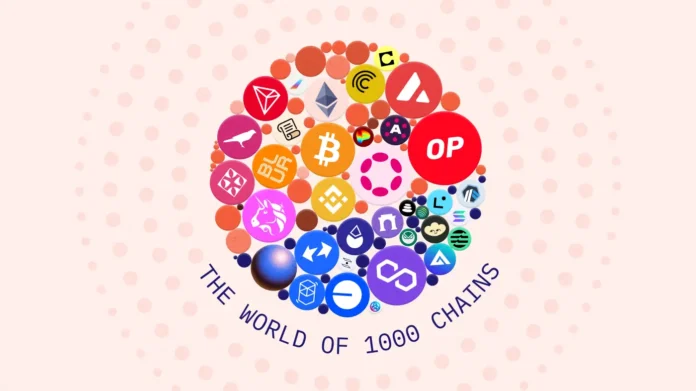
The Blockchain Landscape Is Rapidly Expanding Toward a “World of 1,000 Chains”
Consensus 2024 highlighted a shift from a handful of dominant ledgers to a flourishing multichain ecosystem. Dune Analytics is positioning itself as the data hub for this emerging reality with its new “Dune Catalyst” program.
A Multichain Future Takes Center Stage
The recent Consensus 2024 conference underscored a growing consensus among developers, investors, and analysts: the next era of Web 3 will be defined not by a few marquee networks but by a sprawling mosaic of purpose‑built blockchains. While veterans continue to champion Bitcoin, Ethereum and Solana as the pillars of the space, a wave of new platforms is already being launched to address niche use cases ranging from gaming and digital collectibles to specialized financial products.
The acceleration is fueled by a suite of open‑source and “roll‑up‑as‑a‑service” toolkits that dramatically lower the barrier to entry for new chains. Offerings such as the Optimism OP Stack, Arbitrum Orbit, zkSync Stack, Polygon Labs CDK, and services from Conduit, Gelato Network, Caldera and AltLayer enable developers to spin up a Layer‑2 or independent L1 with relatively little custom code. In the last week alone, conversations with 16 projects slated to go live within the next two months—including Galxe’s upcoming Gravity chain—illustrated how quickly the pipeline of new networks is filling.
The Data Dilemma
Proliferation, however, brings a new challenge: data fragmentation. Public blockchain data is expanding at an exponential rate, yet the tools for querying, visualising, and analysing that data remain scattered across disparate APIs, explorer interfaces, and proprietary dashboards. For developers seeking to build cross‑chain DeFi protocols, analysts tracking ecosystem health, or enterprises evaluating on‑chain activity, the lack of a unified data layer hampers innovation and slows decision‑making.
Dune’s Strategic Response
Dune Analytics, long regarded as a “source of truth” for on‑chain metrics, acknowledged that its coverage—once limited to roughly a dozen chains—no longer reflects the breadth of the ecosystem. In January, the company announced an ambitious roadmap to become the central repository for all crypto data. To date, Dune supports more than 30 blockchains and indexes over 1,000 protocols, a foundation the firm intends to expand dramatically.
The latest initiative, Dune Catalyst, invites blockchain founders to integrate their networks into the Dune platform ahead of the upcoming DuneCon in Bangkok (scheduled for November). The goal is to onboard at least 100 additional chains before the event, bringing the total closer to the “1,000‑chain” vision. Interested projects can apply through Dune’s dedicated Catalyst portal.
Industry Implications
- Accelerated Innovation: Lower‑cost launch stacks enable teams to iterate quickly, fostering a surge of specialized chains that can experiment with novel consensus mechanisms, tokenomics, and governance models.
- Increased Interoperability Pressure: As the number of active networks climbs, the need for robust bridging and cross‑chain communication protocols will intensify, potentially reshaping the DeFi landscape toward more composable, multi‑chain applications.
- Data‑as‑Infrastructure Play: Platforms that succeed in aggregating and normalising data across a wide array of chains will become critical infrastructure, analogous to cloud providers in the early days of the internet.
- Competitive Differentiation for Chains: Visibility on mainstream analytics platforms like Dune can become a competitive factor, helping new chains attract developers and liquidity by offering transparent, accessible on‑chain metrics.
Key Takeaways
- Multichain is No Longer Niche: The ecosystem is moving toward a thousand publicly accessible blockchains, each serving distinct use cases.
- Launch Toolkits Democratise Creation: Open‑source stacks and roll‑up services are reducing the technical and financial hurdles of deploying new networks.
- Data Fragmentation Is a Bottleneck: Without unified analytics, the value of the expanding chain universe cannot be fully realised.
- Dune Catalyst Aims to Bridge the Gap: By targeting 100 new integrations before DuneCon, Dune seeks to become the primary data gateway for the burgeoning multichain world.
- Future Success Depends on Interoperability and Transparency: Projects that can both connect with other chains and expose clear on‑chain data will likely capture the most attention and capital.
As the blockchain sector pivots toward a diversified, multichain architecture, the ability to surface, query, and interpret data across dozens—if not thousands—of networks will be a decisive factor in shaping the next wave of DeFi innovation. Dune Analytics’ Catalyst program signals that data providers are already moving to meet that demand, positioning themselves as the backbone of a truly interconnected Web 3.
Source: https://dune.com/blog/1000-blockchains