Trump Urges Fed Rate Cut as Inflation Risks Mount – What It Means for Markets and Crypto
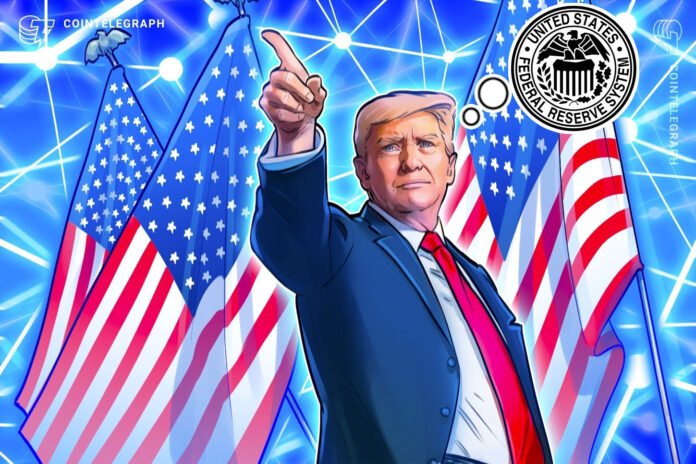
Washington, D.C. – President Donald Trump has once again called on the Federal Reserve to lower interest rates, urging a “special meeting” to act quickly. The demand comes amid rising geopolitical tensions and a mixed inflation outlook that could test the central bank’s policy stance. While the president’s comments have sparked debate in Washington, market data suggest the Fed is likely to hold rates steady at its March meeting, a decision that carries implications for both traditional finance and the cryptocurrency sector.
Presidential Pressure on the Fed
During a recent White House briefing, the president told officials that there was “no better time to cut interest rates than now,” a sentiment he also echoed on his social media platform, Truth Social, where he said the Fed chair should be “dropping interest rates, immediately.” Trump has repeatedly argued that the United States should have “substantially lower” rates—potentially the lowest among major economies—to ease the burden of the roughly $39 trillion national debt, stimulate housing and stock markets, and indirectly boost higher‑risk assets such as cryptocurrencies.
Federal Reserve’s Upcoming Decision
The Federal Reserve began a two‑day policy meeting on Tuesday, with a decision on the federal funds rate scheduled for Wednesday. Despite the president’s lobbying, the CME Group’s FedWatch tool shows a 99 % probability that the target range of 3.50 %–3.75 % will remain unchanged this week. The outlook for the April 29 meeting is similarly weighted, with a 97 % chance of no change.
Market participants are therefore largely pricing in a “wait‑and‑see” approach. The Fed is expected to monitor inflation data, especially the Consumer Price Index (CPI), before considering any policy shift. February’s CPI held steady at 2.4 %, but analysts anticipate a rise in March as oil prices climb amid the ongoing U.S.–Iran conflict.
Inflation, Oil Prices, and the Risk of Higher Rates
The conflict with Iran has led to a noticeable uptick in crude prices, which could translate into higher fuel costs and, subsequently, elevated food and transportation expenses. Some Fed officials have hinted that a sustained inflationary pressure could prompt a future rate hike rather than a cut, a scenario that would contradict Trump’s call for immediate easing.
Crypto Market Reaction
Cryptocurrency markets are particularly sensitive to changes in borrowing costs and macro‑policy signals. Lower rates typically reduce the cost of capital, encouraging investors to allocate funds toward higher‑yielding assets such as Bitcoin, Ethereum, and other digital tokens. Conversely, a decision to hold or raise rates can dampen speculative appetite.
Jeff Mei, chief operating officer of the BTSE exchange, noted that traders have already factored in a low probability of rate cuts this year. With oil‑driven inflation still uncertain, he expects limited downward pressure on crypto prices in the short term, although the broader market could still be influenced by any surprise moves from the Fed.
Potential Shift in Fed Leadership
Trump has signaled a preference for Kevin Warsh, a former Fed governor, as his successor to Jerome Powell. Warsh, slated to assume the chairmanship in mid‑May when Powell’s term ends, is perceived as more dovish and possibly more receptive to rate reductions. While Warsh’s policy stance will not affect the March decision, it could shape the Fed’s direction later in the year if the political transition materializes.
Analysis
-
Presidential influence vs. institutional independence – While the president’s public pleas underscore a political desire for stimulus, the Fed’s mandate to achieve price stability and maximum employment typically insulates it from direct political pressure. The near‑certain “hold” outcome reflects that independence.
-
Inflation trajectory remains a wildcard – Geopolitical shocks to oil markets add a layer of uncertainty to the Fed’s inflation outlook. If CPI data for March confirms an upward swing, the central bank may feel compelled to keep rates steady or even contemplate a modest increase to pre‑empt entrenched price pressures.
-
Crypto assets may stay resilient in the short run – With the probability of a rate cut vanishing, the crypto market is likely to continue operating under the assumption of a stable interest‑rate environment. However, any unexpected dovish pivot—whether via a surprise Fed decision or the eventual appointment of a more rate‑cut‑friendly chair—could reignite speculation and drive capital back into digital assets.
- Fiscal debt concerns keep the rate‑cut narrative alive – The massive national debt makes lower borrowing costs an attractive proposition for policymakers. Even if the Fed does not act now, the fiscal pressure may sustain political advocacy for softer monetary policy, influencing future discussions.
Key Takeaways
- Trump’s demand for a Fed rate cut has not altered market expectations; CME data shows a 99 % chance that the March meeting will result in no change.
- Inflation risks are rising due to higher oil prices tied to the U.S.–Iran conflict, potentially prompting the Fed to keep a tighter stance.
- Cryptocurrency markets are likely to see limited impact in the immediate term, as traders have already priced in a low probability of cuts this year.
- A possible change in Fed leadership later this year could shift policy if Kevin Warsh, who is perceived as more dovish, assumes the chairmanship.
- Long‑term fiscal pressures keep the conversation about rate reduction alive, even if short‑term monetary policy remains unchanged.
The coming weeks will reveal whether inflation data reinforces the Fed’s “hold” stance or forces a reassessment, a development that will be closely watched by both traditional investors and the crypto community.
Source: https://cointelegraph.com/news/fed-should-hold-special-meeting-cut-rates-now-trump?utm_source=rss_feed&utm_medium=feed&utm_campaign=rss_partner_inbound