Eyes on Asia: Does On‑Chain Data Reveal a Shift Toward Regional Dominance?
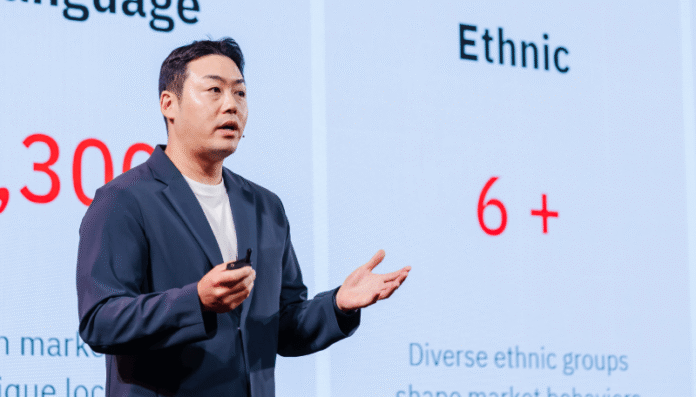
DuneCon 2024 – Tiger Research analyst Daniel Kim
At the annual DuneCon conference, Daniel Kim of Tiger Research presented a data‑driven assessment of how blockchain activity is evolving across the globe. His findings suggest that Asia is rapidly emerging as a decisive force in the Web3 ecosystem, driven by a combination of user adoption, developer activity, and cultural factors that differentiate the region from North America and Europe.
Overview
Kim’s talk centered on a series of on‑chain metrics that together paint a picture of a continent that is not only the largest consumer of crypto services but also a burgeoning source of innovation. By juxtaposing transaction volumes, smart‑contract deployments, stable‑coin issuance, and social‑media engagement, the analysis offers a holistic view of where the next wave of decentralized finance (DeFi) growth may originate.
Data Highlights
| Indicator | Findings | Implication |
|---|---|---|
| Crypto user base | Roughly 58 % of all crypto wallets are registered to Asian residents. | A massive, already‑engaged audience that can fuel network effects for new protocols. |
| Trading volume | Japan and South Korea rank second and fourth globally for fiat‑denominated crypto trades. | High liquidity and market depth in the region, attracting both retail and institutional participants. |
| Developer ecosystem | Asian developers contribute about 51 % of all activity on GitHub related to blockchain projects. | Strong pipeline of talent for building and maintaining DeFi infrastructure. |
| Super‑app environment | Platforms such as WeChat, KakaoTalk and LINE dominate daily digital interactions. | Integrated ecosystems that can serve as natural gateways for Web3 services and tokenized experiences. |
| Stable‑coin growth | Local‑currency stablecoins—e.g., Singapore’s XSGD and Indonesia’s XIDR—have shown rapid issuance and circulation. | Provides a bridge between fiat economies and decentralized protocols, especially in markets with less mature banking infrastructure. |
| Smart‑contract deployment | Ethereum mainnet deployments from Asian addresses now match those of other major regions. | Indicates parity in developer productivity and a widening geographic distribution of on‑chain innovation. |
| DeFi user behavior | Uniswap activity from Asia has shifted from primarily “shark” investors in 2020 to a broader retail base in 2024. | Signals a maturation of the market, with everyday users moving from centralized exchanges to decentralized alternatives. |
| Social‑media dynamics | Languages such as Thai, Vietnamese and Korean dominate activity on Web3 platforms (e.g., Forecaster), surpassing North American and European engagement since early 2023. | Demonstrates a growing community‑driven narrative that could influence protocol governance and marketing strategies. |
Analytical Takeaways
- Scale of Adoption – With more than half of the world’s crypto wallets linked to Asian users, the region offers a built‑in network effect that can accelerate the diffusion of new DeFi products.
- Cultural Compatibility – The prevalence of “super apps” that blend messaging, payments and lifestyle services creates a fertile ground for embedding blockchain functionalities directly into users’ everyday workflows.
- Liquidity Backbone – Strong fiat‑based trading volumes and the rise of locally‑denominated stablecoins suggest that Asian markets can provide both the capital and the stable medium of exchange needed for sophisticated DeFi operations.
- Developer Parity – Matching global smart‑contract deployment levels signals that the talent pipeline in Asia is no longer a peripheral source but a core engine of protocol development.
- Retail‑Centric DeFi – The transition from whale‑driven to retail‑driven activity on major DEXs reflects broader financial inclusion and points to a more resilient user base that is less dependent on large token holders.
- Community Narrative – Growing dominance of Asian languages and higher post‑volume metrics on Web3 social platforms highlight an emerging discourse that could shape market sentiment and governance outcomes.
Strategic Recommendations for Builders
- Local Partnerships – Collaborate with regional fintech firms, super‑app operators, and community influencers to tailor product interfaces and compliance frameworks to each market’s regulatory climate.
- Multi‑Language UX – Prioritize native language support (e.g., Korean, Japanese, Bahasa Indonesia, Thai) in wallets, dApps and onboarding materials to lower friction for mass adoption.
- Stable‑Coin Integration – Design protocols that can natively accept and settle in locally‑issued stablecoins, reducing conversion costs and improving user experience.
- Retail‑Friendly Incentives – Shift marketing and incentive structures away from large‑holder “shark” tactics toward rewards that appeal to everyday users—such as gamified onboarding, micro‑staking, and community‑driven airdrops.
- Data‑Driven Localization – Leverage on‑chain analytics to monitor regional transaction patterns, enabling rapid adjustments to product roadmaps based on real‑time usage signals.
Outlook
The convergence of user density, developer talent, and culturally aligned digital ecosystems positions Asia as a catalyst for the next phase of Web3 expansion. While regulatory heterogeneity remains a challenge, the region’s demonstrated appetite for both centralized and decentralized financial services suggests that the balance is tipping in favor of broader DeFi participation. Stakeholders that adapt their strategies to the nuanced demands of Asian markets are likely to benefit from the momentum that Tiger Research’s on‑chain analysis highlights.
For a full view of Daniel Kim’s presentation, the DuneCon 2024 session is now available for streaming.
Source: https://dune.com/blog/eyes-on-asia-does-on-chain-data-reveal-the-shift