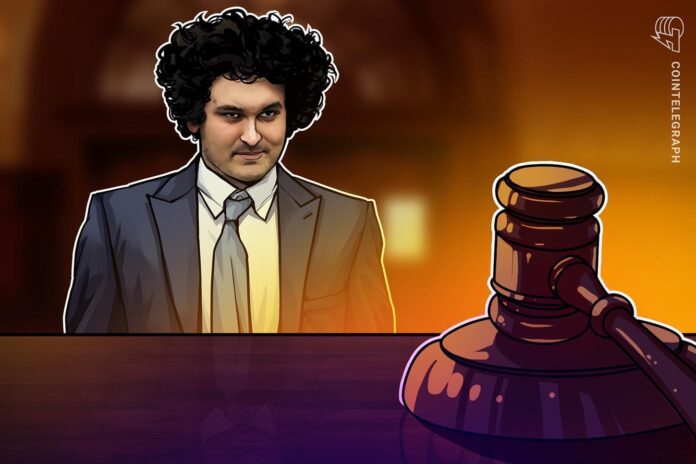
U.S. Prosecutors Oppose Sam Bankman‑Fried’s Request for a New Trial
Washington – March 12, 2026 – The Justice Department has formally asked a federal judge to deny former FTX chief Sam Bankman‑Fried’s motion for a retrial, arguing that the defense has not satisfied the legal threshold for overturning the conviction that stemmed from the spectacular collapse of the cryptocurrency exchange.
Background
In November 2023, a Manhattan jury found Bankman‑Fried guilty on seven counts of fraud and conspiracy for allegedly misusing customer deposits at FTX and its affiliated trading firm, Alameda Research. He was subsequently sentenced to 25 years in prison. While the conviction remains in place, Bankman‑Fried’s legal team has continued to pursue post‑conviction relief, filing a motion in February 2026 that seeks a new trial based on the purportedly “new” testimony of two former FTX executives, Ryan Salame and Daniel Chapsky.
Prosecutors’ Arguments
According to court filings referenced by Bloomberg, U.S. prosecutors contend that the evidence cited by the defense does not qualify as newly discovered. Both Salame and Chapsky had been identified to the defense prior to the 2023 trial, and their statements are not considered fresh revelations that would materially alter the government’s case. The prosecutors maintain that the standard for granting a retrial—typically requiring evidence that could not have been obtained with reasonable diligence and that would likely produce a different verdict—has not been met.
The Department of Justice also stressed that allowing a new trial on this basis would set an unfavorable precedent, potentially opening the door for defendants to revisit convictions on the basis of testimony that was already known to the defense but not emphasized at trial.
Judicial Status
Judge Lewis Kaplan, who presided over the original fraud trial, previously ordered the prosecution to file a response to Bankman‑Fried’s motion by March 11. The judge has not yet issued a ruling on whether the request for a new trial will proceed. In parallel, Bankman‑Fried continues to pursue an appeal of his conviction before the U.S. Court of Appeals for the Second Circuit.
Wider Context
The retrial request emerges amid ongoing speculation that Bankman‑Fried may be seeking a presidential pardon. In early February, the former CEO publicly praised President Donald Trump’s stance on cryptocurrency, fueling rumors of political lobbying. However, Trump has publicly stated that he has no intention of issuing a pardon for the former exchange founder, leaving the appeal process and the new‑trial motion as the primary mechanisms for potentially overturning the conviction.
Analysis
- Legal Standard: U.S. courts require “newly discovered” evidence that is both material and likely to change the outcome of a case. The prosecution’s position that Salame’s and Chapsky’s testimony was already known to the defense weakens the argument that the evidence meets this stringent criterion.
- Strategic Implications: If the judge denies the motion, Bankman‑Fried’s focus will shift entirely to his appellate litigation. A denial could also reinforce the prosecutorial stance that the original trial was thorough and that the conviction should stand.
- Political Dimension: While the pardon discussion adds a public‑relations layer, it has not produced any tangible legal advantage for Bankman‑Fried. The lack of official support from the White House suggests that his legal team will need to rely on procedural avenues rather than executive clemency.
Key Takeaways
- Prosecutors have formally opposed the new‑trial request, citing insufficient legal grounds.
- The defense’s argument hinges on testimony from former FTX executives, which prosecutors argue is not newly discovered.
- Judge Lewis Kaplan has yet to rule on the motion; the decision will likely shape the next steps in Bankman‑Fried’s post‑conviction strategy.
- Speculation about a presidential pardon remains unsubstantiated; Trump has denied any intention to grant clemency.
- The outcome of the retrial motion will have broader implications for how post‑conviction motions are evaluated in high‑profile financial crime cases.
The case continues to be a focal point for both the cryptocurrency community and legal observers, as it tests the limits of post‑conviction relief in one of the industry’s most consequential fraud prosecutions.
Source: https://cointelegraph.com/news/us-prosecutors-oppose-sam-bankman-fried-new-trial-ftx-case?utm_source=rss_feed&utm_medium=feed&utm_campaign=rss_partner_inbound