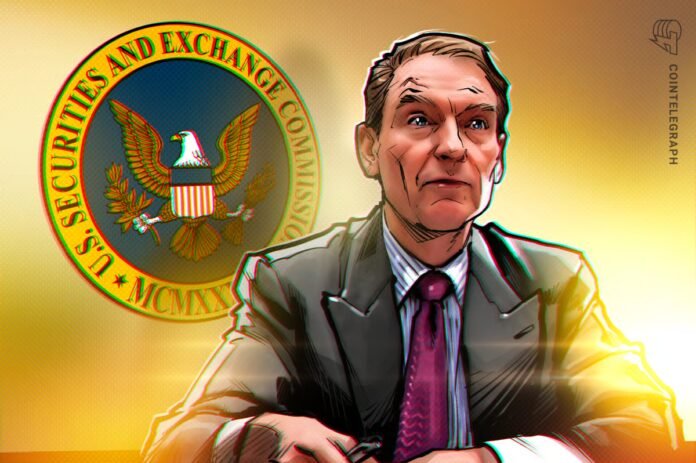
SEC Chair Calls for “Coordinated Oversight” Between the SEC and CFTC
Washington, FL – At the FIA Global Cleared Markets Conference, SEC Chair Paul Atkins announced plans for a refreshed memorandum of understanding with the Commodity Futures Trading Commission, aiming to end duplicate enforcement actions and streamline regulatory responses across the two agencies.
New Framework for Coordination
In a speech delivered Tuesday in Florida, Atkins outlined a proposal for the SEC and CFTC to update their existing memorandum of understanding (MOU). The revised agreement would formalize joint reviews of product filings, align legal theories where the agencies’ statutory authorities intersect, and coordinate remedial strategies in cases that fall under both securities and commodities regulations.
“Fragmented, redundant enforcement does not increase deterrence—it only adds confusion,” Atkins said, emphasizing that a single operating environment should allow the two bodies to cooperate without overstepping each other’s jurisdiction.
The SEC will begin holding regular joint meetings with CFTC officials on pending applications, and a new “harmonization” portal has been launched to share information between the regulators.
Context: Overlapping Crypto Jurisdictions
Cryptocurrencies and related digital‑asset products have long existed in a regulatory gray area, with the SEC overseeing securities and the CFTC supervising commodities. The lack of a clear-cut division has resulted in cases where the same activity is subject to enforcement by both agencies, creating uncertainty for market participants.
Atkins did not single out digital assets in his remarks, but the language directly addresses the “regrettable era of duplicative enforcement actions” that has affected many crypto firms. CFTC Chair Michael Selig has echoed a cooperative tone in recent weeks, especially as Congress debates the CLARITY Act—a market‑structure bill that would expand the CFTC’s authority over crypto markets.
The CLARITY Act passed the House in July but has stalled in the Senate, where discussions continue over issues such as stable‑coin yields, tokenized equities, and potential conflicts of interest.
Leadership Gaps Highlighted
Both agencies are currently operating with limited leadership. The CFTC’s five‑member panel is effectively reduced to a single confirmed commissioner—Michael Selig—who replaced acting chair Caroline Pham. The SEC similarly lists three Republican commissioners, with no recent nominations from President Donald Trump to fill the remaining seats. The vacancies raise concerns about the ability of the agencies to fully execute the proposed coordinated oversight.
Analyst Perspective
-
Regulatory certainty: A unified approach could reduce the compliance burden for crypto firms, which often must navigate overlapping requirements. Clear, joint guidance may also accelerate product approvals and foster innovation.
-
Enforcement efficiency: Coordinated investigations are likely to be more cost‑effective and could enhance deterrence by presenting a single, consistent regulatory front.
-
Political risks: The stalled CLARITY Act and the current leadership vacancies suggest that legislative and executive support for broader coordination remain uncertain. Should the Senate fail to pass the bill, the agencies may have to rely on informal cooperation rather than statutory authority.
- Market impact: In the short term, the announcement has been positively received by industry participants looking for a reduction in regulatory friction. Longer‑term effects will depend on how quickly the MOU is updated and how comprehensively the agencies implement joint procedures.
Key Takeaways
- SEC and CFTC are moving toward a formalized coordination framework that will address overlapping jurisdiction, particularly in the crypto space.
- Joint meetings and a shared harmonization portal will enable the agencies to align enforcement actions and regulatory reviews.
- Leadership vacancies at both regulators may slow the rollout of the new MOU, although both chairs have expressed a strong commitment to cooperation.
- The CLARITY Act’s uncertain fate means that statutory authority for expanded CFTC oversight of digital assets remains in limbo, leaving the updated MOU as the primary vehicle for coordination.
- Crypto firms may see fewer duplicated enforcement actions, potentially lowering compliance costs and regulatory uncertainty.
The next steps will involve drafting the updated memorandum, establishing regular inter‑agency communication channels, and monitoring legislative developments that could further shape the regulatory landscape for digital assets in the United States.
Source: https://cointelegraph.com/news/sec-chair-oversight-us-financial-agencies?utm_source=rss_feed&utm_medium=feed&utm_campaign=rss_partner_inbound