Uncovering the Real Adoption of Smart Accounts: Insights from DuneCon 2024
By [Your Name] – March 4 2026
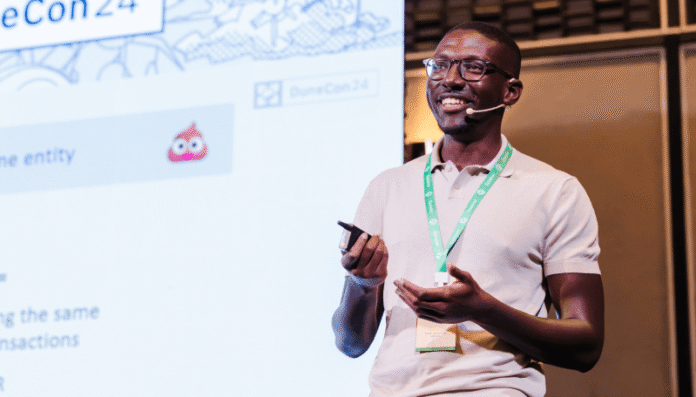
At DuneCon 2024, leading on‑chain analyst Kofi—often referred to as the “Dune Wizard”—delivered a data‑driven deep dive into the current state and future trajectory of smart accounts (also known as smart contract wallets) in the Web3 ecosystem. His presentation, which blended on‑chain analytics with practical onboarding scenarios, offered a clearer picture of how these programmable wallets are beginning to supplant traditional externally owned accounts (EOAs) and what hurdles remain before mainstream adoption can be claimed.
From EOAs to Smart Accounts: Why the Shift Matters
Kofi opened with a comparison of the two dominant wallet paradigms. While EOAs—simple public‑key based accounts—have been the backbone of Ethereum since its inception, they lack the flexibility needed for today’s user experience expectations. Smart accounts, built on top of ERC‑4337’s “account abstraction” layer, can embed custom logic directly into the wallet contract. This enables features such as:
- Built‑in transaction batching – reducing gas costs and simplifying multi‑step operations.
- Programmable security – e.g., daily spend limits, social recovery, and multi‑factor authentication.
- Improved UX – users can pay gas with tokens other than ETH, eliminating the need for separate “gas wallets.”
According to Kofi’s analysis, the functional advantages of smart accounts are already prompting developers to redesign onboarding flows that were previously hamstrung by the friction of seed‑phrase management and gas‑payment logistics.
Real‑World Onboarding: A Comparative Look
Using a set of case studies from both established DeFi platforms and emerging NFT marketplaces, Kofi illustrated how the transition from a conventional wallet to a smart account can reduce the number of steps a new user must complete. In a traditional flow, a user typically:
- Generates a seed phrase.
- Secures the phrase offline.
- Acquires ETH for gas.
- Executes a series of transactions to set approvals.
A smart‑account‑enabled flow collapses these actions into a single, permission‑based interaction that can be executed once the user verifies identity via a passkey or social login. The result, Kofi argued, is a lower barrier to entry that could unlock a broader demographic of participants, especially those unfamiliar with cryptographic key management.
ERC‑4337 and the Momentum Behind Standards
ERC‑4337, the standard that introduced account abstraction without requiring changes to the Ethereum consensus layer, was highlighted as the technical catalyst for the current surge in smart‑account deployments. Kofi cited on‑chain metrics showing millions of smart accounts created since the standard’s activation in late 2023. Moreover, several high‑profile dApps—ranging from decentralized exchanges to gaming platforms—have begun to natively support ERC‑4337, further validating the model.
The analyst also noted that the ecosystem is already seeing the emergence of complementary standards, such as ERC‑3077, which aims to simplify the migration of existing EOAs into smart accounts by providing a universal conversion interface. This could accelerate the “retrofit” of legacy users into the newer paradigm.
Cutting Through the Noise: What Adoption Metrics Really Say
One of the most valuable segments of Kofi’s talk centered on the pitfalls of surface‑level analytics. Public dashboards often display raw smart‑account creation counts, but these numbers can be inflated by spam contracts, bot farms, and sybil attacks. To address this, Kofi demonstrated a multi‑stage filtering pipeline that:
- Identifies contract interactions with zero‑value transfers as likely spam.
- Cross‑references transaction histories with known bot address lists.
- Applies activity thresholds (e.g., minimum number of distinct counterparties) to isolate genuinely engaged wallets.
After applying these filters, Kofi reported that active smart accounts—those executing meaningful transactions on a regular basis—represent roughly 12‑15 % of the total creation count. While this is still a minority, the trend line is upward, with a month‑over‑month growth rate exceeding 20 % in the last quarter.
Future Directions: Passkeys, Social Recovery, and Beyond
Looking ahead, Kofi emphasized that the next wave of innovation will revolve around more intuitive authentication mechanisms. Passkey integration—leveraging the WebAuthn standard—could eliminate the need for any private‑key exposure, while social‑recovery schemes would mitigate the risk of loss due to forgotten seed phrases.
He also speculated that ERC‑3077 could serve as a bridge, allowing existing EOAs to “upgrade” into smart accounts without requiring users to migrate funds manually. If widely adopted, such a migration path could dramatically increase the proportion of on‑chain activity that runs under the smart‑account model.
Key Takeaways
| Takeaway | Implication |
|---|---|
| Smart accounts provide functional upgrades over EOAs (transaction batching, programmable security, gas flexibility). | Developers can design richer, user‑friendly products without compromising on security. |
| On‑chain creation numbers are inflated; filtered active usage is lower but growing (≈12‑15 % of total). | Stakeholders should prioritize quality‑of‑use metrics over raw counts when assessing market traction. |
| ERC‑4337 has catalyzed ecosystem support, with millions of wallets already launched. | Expect more dApps to adopt native smart‑account compatibility in the near term. |
| Emerging standards (ERC‑3077) and authentication methods (passkeys) could ease migration. | A smoother user journey may accelerate mainstream acceptance, especially among non‑technical audiences. |
| Data‑driven filtering is essential to separate signal from noise. | Analysts must implement robust heuristics to produce reliable adoption insights. |
Closing Thoughts
Kofi’s presentation at DuneCon 2024 underscored that while smart accounts are still early in their adoption curve, the infrastructure and standards necessary for mass‑scale usage are rapidly coalescing. The combination of technical upgrades (ERC‑4337, upcoming ERC‑3077), improved UX pathways, and refined analytics tools positions smart contract wallets to become the default interface for interacting with decentralized finance and broader Web3 applications.
For developers, investors, and analysts, the message is clear: tracking filtered activity metrics and staying abreast of standardization efforts will be crucial for gauging the true momentum behind smart accounts. As the ecosystem matures, those who can leverage these insights are likely to capture the next wave of innovation in decentralized finance.
Watch the full DuneCon 2024 session for a deeper dive into Kofi’s methodology and data visualizations.
This article is based on the speaker’s analysis presented at DuneCon 2024 and the author’s synthesis of publicly available on‑chain data.
Source: https://dune.com/blog/uncovering-the-real-adoption-of-smart-accounts